O K E A N O S

post room

post

Posted at 14 Oct, 2026
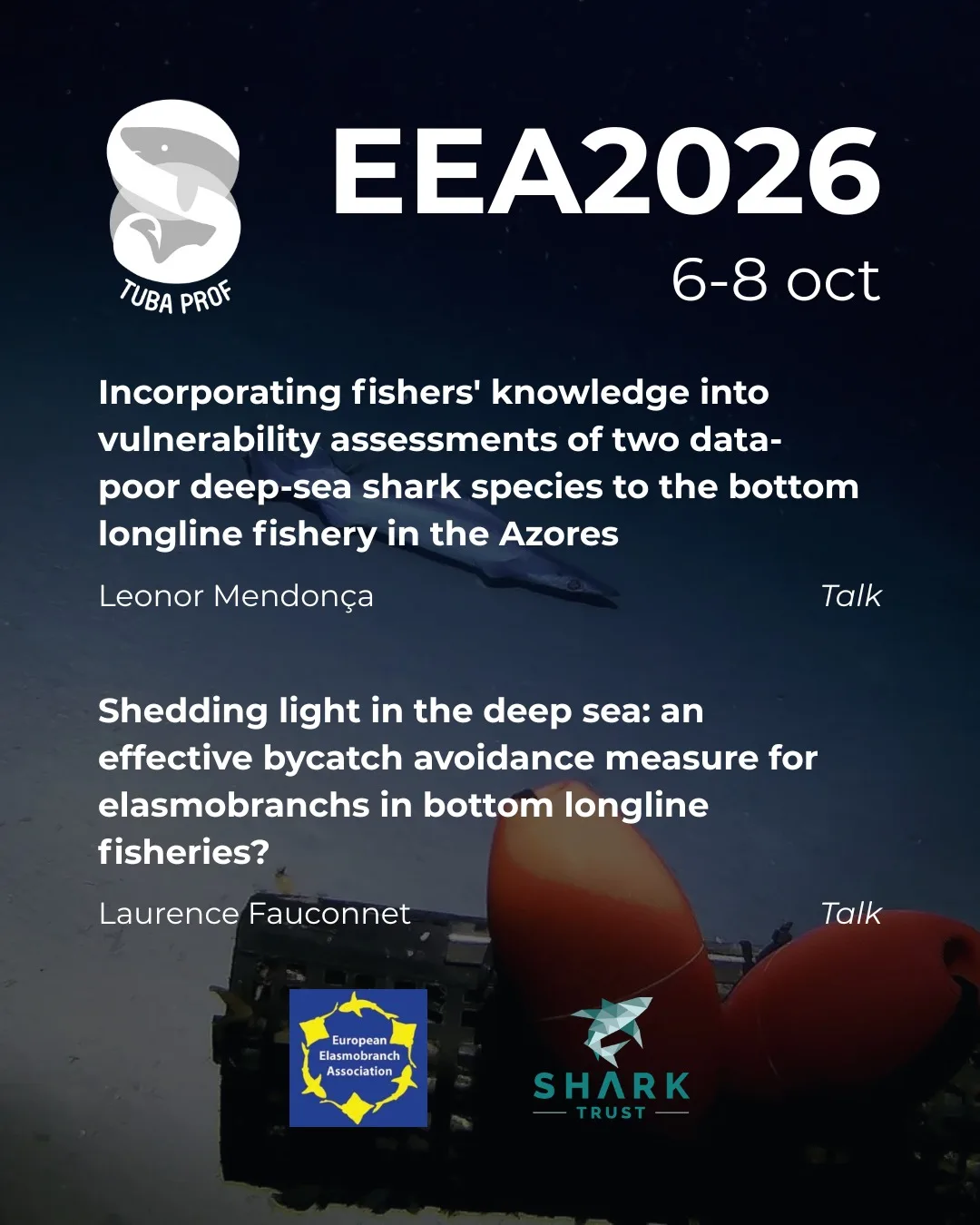
TubaProf researchers present four studies on deep-water elasmobranchs at EEA2026

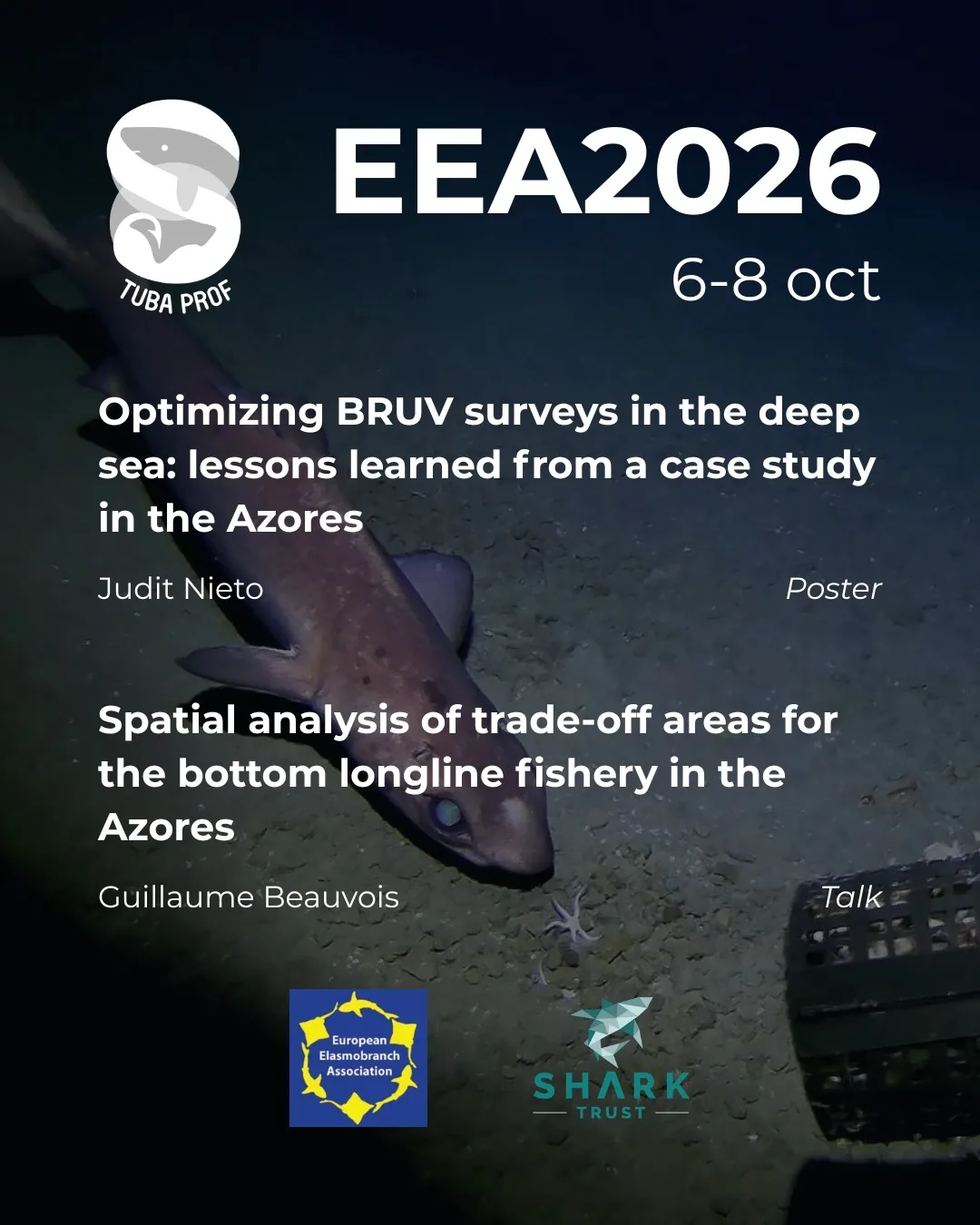
The European Elasmobranch Association Congress 2026 (EEA2026), held online on 6–8 October, provided an opportunity for four members of the TubaProf team to present their latest research on deep-water elasmobranchs in the Azores, addressing their distribution, vulnerability to fishing activities and potential measures to reduce bycatch.

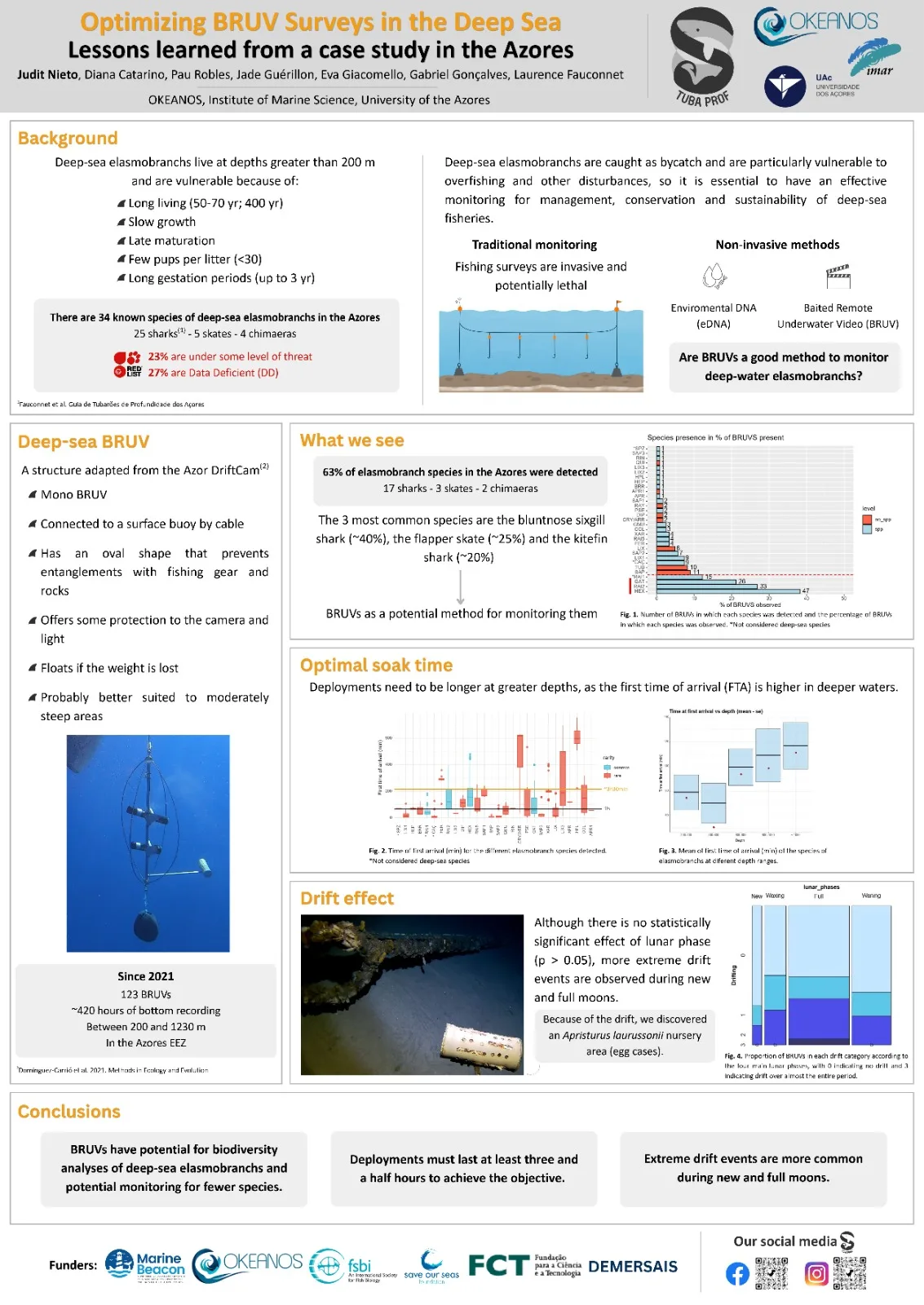
Judit Nieto presented a poster showcasing progress in the use of baited remote underwater video systems (BRUVs) to study deep-water elasmobranchs in the Azores. Based on 500 hours of video recordings collected to date, the research has enabled the team to observe several species in their natural habitats and identify a nursery area of a rare shark species. The poster also highlighted ongoing work exploring the use of artificial intelligence (AI) to accelerate video analysis.

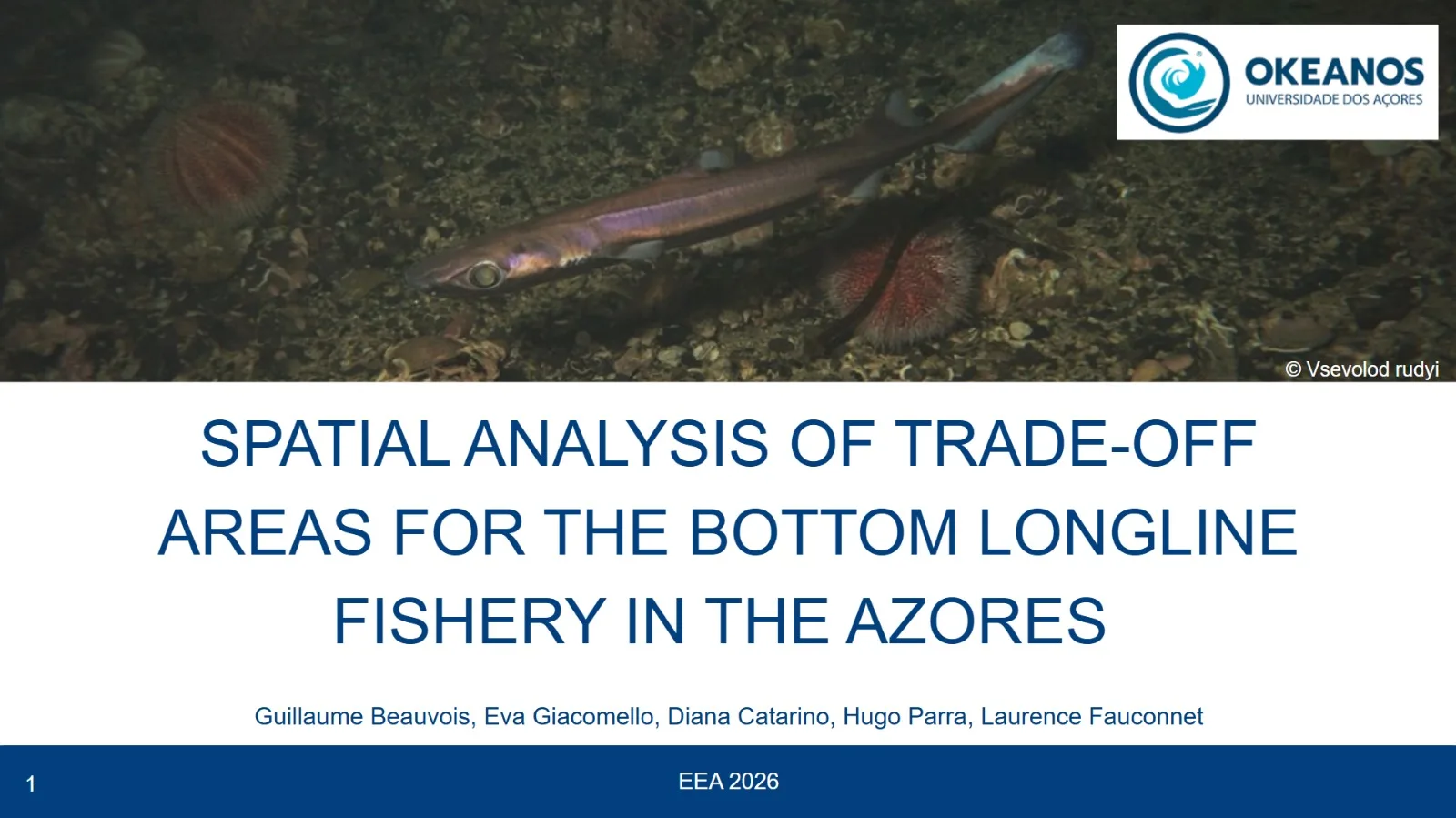
Guillaume Beauvois presented a study investigating the distribution of commercially exploited species and deep-water elasmobranchs to identify areas where bycatch could be reduced while minimising impacts on fishing activities. The resulting maps help distinguish areas more suitable for fishing from those where fishing should be avoided, supporting more targeted spatial management measures.

The other two contributions focused on improving assessments and testing practical bycatch mitigation solutions:

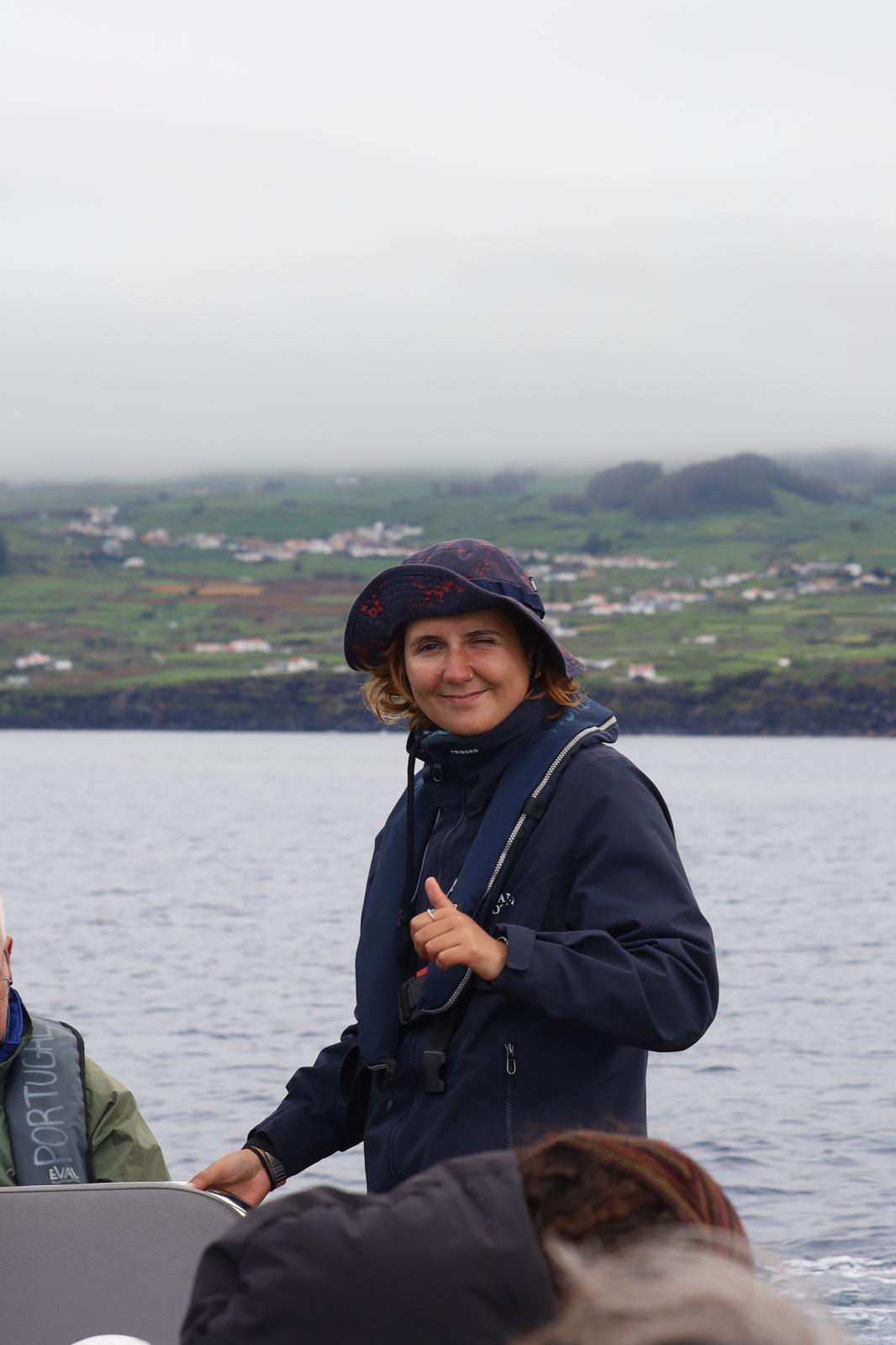
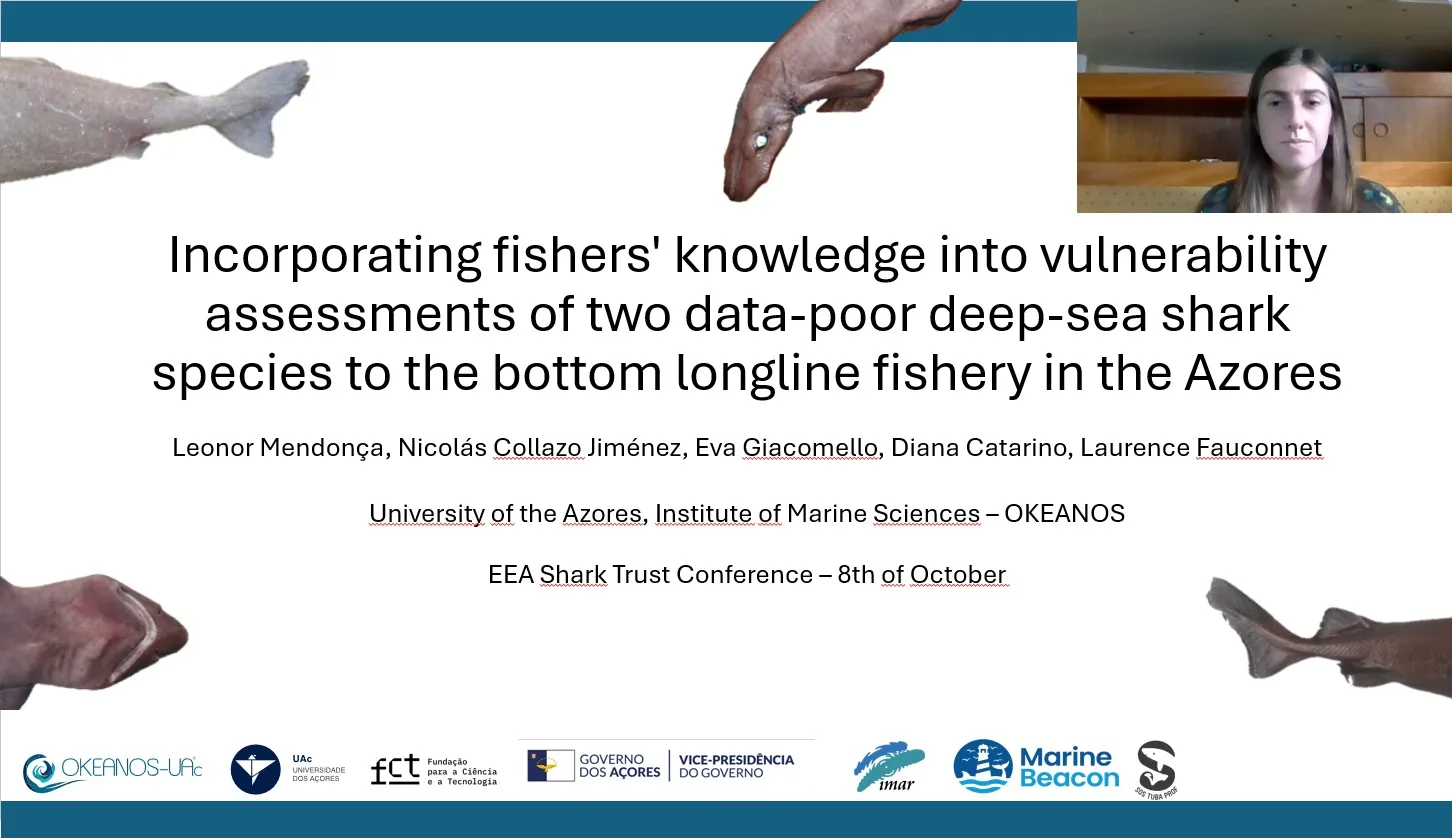
Leonor Mendonça investigated the vulnerability of two deep-water shark species to bottom longline fishing in the Azores, incorporating local fishers' knowledge into the assessment. The substantial changes in the results following its inclusion highlighted the importance of collaboration with the fishing sector, particularly when scientific data are limited.

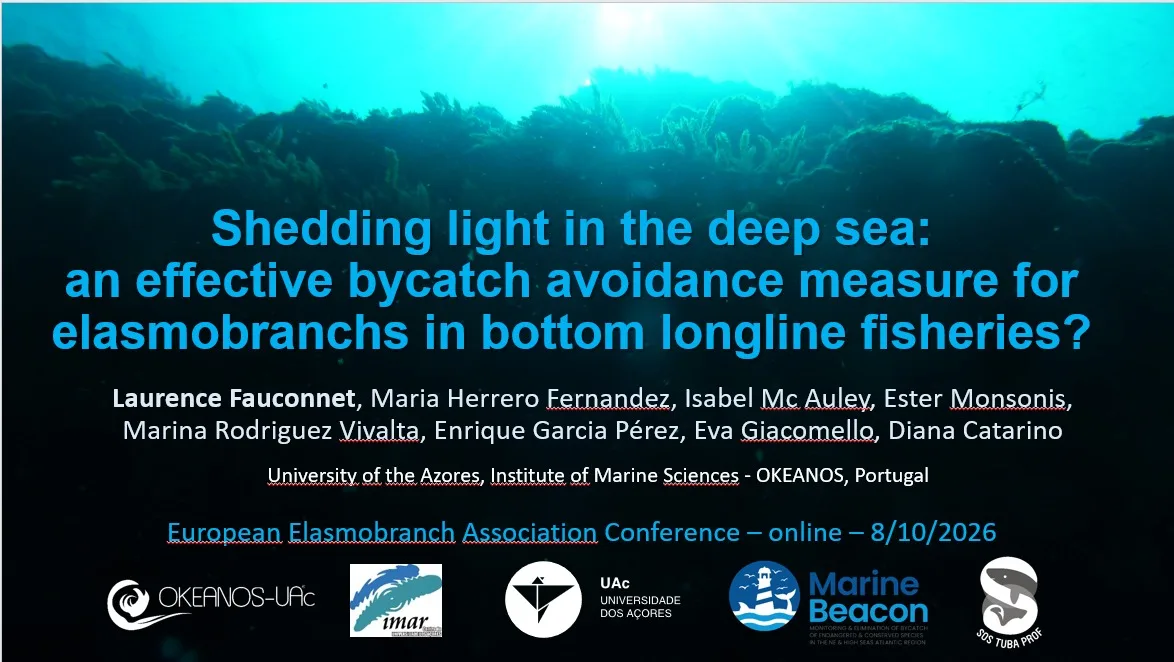
Laurence Fauconnet presented the results of fishing experiments testing whether LED lights of different colours could help reduce the bycatch of deep-water elasmobranchs. The findings showed that responses varied according to both light colour and species, providing insights into the potential development of more effective bycatch mitigation measures.

Together, these four studies contribute to a better understanding of deep-water elasmobranchs in the Azores and highlight the importance of combining scientific research, technological innovation and fishers' knowledge to support more sustainable fisheries and marine conservation.

Congratulations to all four TubaProf team members on their research and participation in EEA2026!

Multimedia

Pillars
Literacy
Updated by

Raquel Coimbra

Last update

14 Oct, 2026 09:45:33

Share this page
Learn more about TubaProf researchers present f...
okeanos.uac.pt/post-377

Financiado por fundos nacionais através da FCT - Fundação para a Ciência e a Tecnologia, I.P., no âmbito dos projetos UID/05634/2025 (DOI: 10.54499/UID/05634/2025), UID/PRR/05634/2025 (DOI: 10.54499/UID/PRR/05634/2025) e UID/PRR2/05634/2025 (DOI: 10.54499/UID/PRR2/05634/2025).

Contact us

+351292 200 400
Send us a message

Find us

OKEANOS - Instituto de Investigação em Ciências do Mar

Universidade dos Açores

Rua Prof. Doutor Frederico Machado, 4,
9901-862 Horta, Faial, Açores, Portugal

Open in map or Send us a message

OKEANOS

Management

Funding

OKEANOS

OKEANOS WEB PORTAL © Okeanos-UAç, All Rights Reserved - 2026 — version 1.0.1