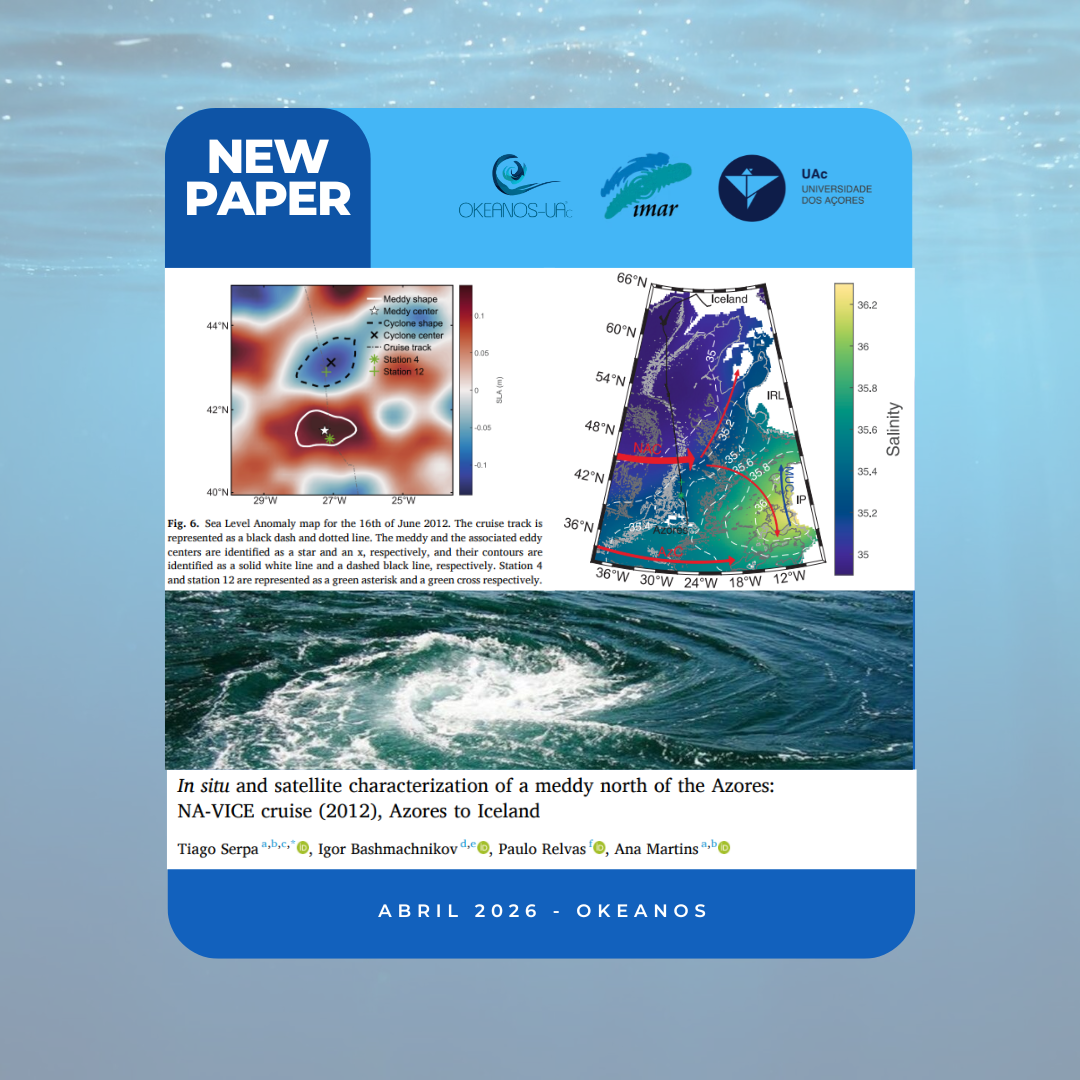
PT No coração do Atlântico Norte, escondem-se verdadeiros “gigantes invisíveis”: vórtices oceânicos de subsuperfície, conhecidos como meddies. Estas estruturas anticiclónicas transportam água mais quente e salgada, proveniente do Mar Mediterrâneo, viajando silenciosamente a grandes profundidades ao longo do oceano.
Durante uma missão científica entre os Açores e a Islândia, foi descoberto um destes fenómenos — e numa localização surpreendente, muito mais a norte do que o habitual! Com cerca de 60 km de raio, este impressionante vórtice revelou ainda uma interação dinâmica com um vórtice ciclónico vizinho, conseguindo aprisionar água mediterrânica das profundezas.
Recorrendo a tecnologia de ponta — como perfis CTD, medições ADCP e dados de satélite — os cientistas da Universidade dos Açores conseguiram rastrear a sua origem até ao talude continental irlandês, desvendando mais um mistério das águas profundas.
Esta descoberta vem desafiar o conhecimento atual, sugerindo que estes vórtices podem formar-se em regiões mais a norte do que se pensava — com implicações importantes para a circulação oceânica e para a biodiversidade marinha no Atlântico Nordeste.
EN In the heart of the North Atlantic, true “invisible giants” lie hidden: subsurface ocean vortices known as meddies. These anticyclonic structures transport warmer, saltier water from the Mediterranean Sea, travelling silently through the ocean at depth.
During a scientific mission between the Azores and Iceland, one of these phenomena was discovered — and in a surprising location, much farther north than usual. With a radius of about 60 km, this remarkable vortex also revealed a dynamic interaction with a neighbouring cyclonic vortex, trapping Mediterranean water from depth.
Using advanced technologies — including CTD profiles, ADCP measurements, and satellite data — scientists from the University of the Azores were able to trace its origin back to the Irish continental slope, uncovering yet another mystery of the deep ocean.
This discovery challenges current understanding, suggesting that these vortices can form in regions farther north than previously thought — with important implications for ocean circulation and marine biodiversity in the Northeast Atlantic.
Paper link.