Ana Colaço embarca em campanha científica com destino ao campo hidrotermal Lucky Strike
Entre 25 de agosto e 13 de setembro, a investigadora do Instituto OKEANOS, Ana Colaço, participa numa campanha científica a bordo do navio de investigação Pourquoi Pas?, com destino ao campo hidrotermal Lucky Strike, localizado na Dorsal Mesoatlântica.
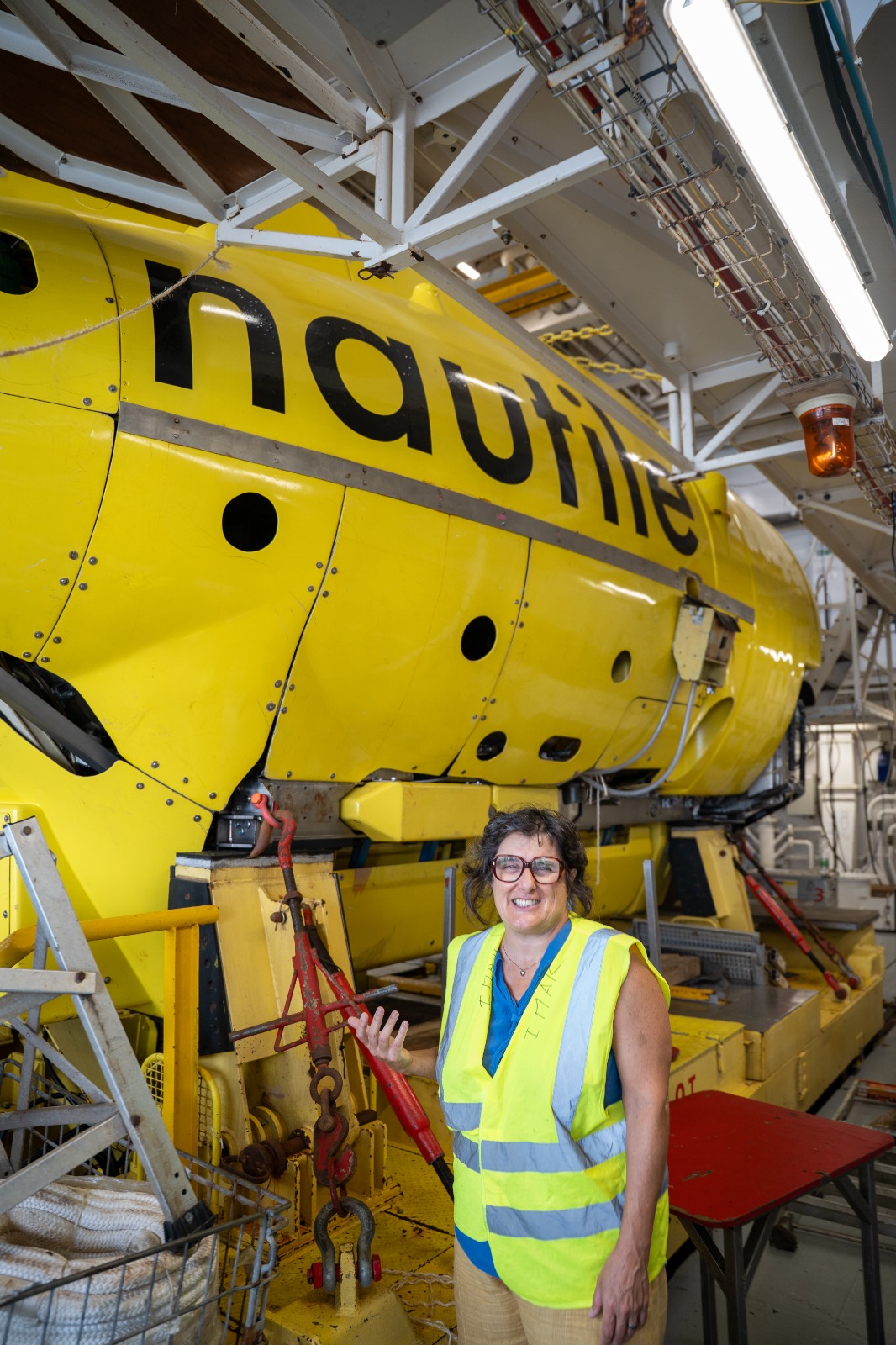
A missão permitirá aprofundar o conhecimento sobre os ecossistemas associados às fontes hidrotermais, ambientes extremos do oceano profundo onde a vida se desenvolve sem depender diretamente da luz solar. O objectivo da missão é fazer a manutenção do observatório do EMSO-ERIC que adquire dados desde 2010. Nesta campanha para além do submersivel Nautile, contará também com o AUV600-Ulyx, que irá mapear o campo hidrotermal a a dorsal com vários tipos de sensores geológicos e geoquímicos. Durante a campanha, a investigadora participará em trabalhos de investigação dedicados ao estudo destas comunidades únicas e da biodiversidade que habita o no ecossistemas que rodeia as fontes hidrotermais a 1700 metros de profundidade.
Para além da investigação nas fontes hidrotermais, a campanha inclui também um teste experimental relacionado com macroalgas invasoras e o seu potencial papel no sequestro de carbono.
A campanha reúne investigação fundamental sobre a biodiversidade das profundezas marinhas e novas abordagens para compreender o papel do oceano no ciclo global do carbono.
ENG From 25 August to 13 September, OKEANOS Institute researcher Ana Colaço will take part in a scientific campaign aboard the research vessel Pourquoi Pas?, heading to the Lucky Strike hydrothermal vent field, located on the Mid-Atlantic Ridge.
The mission will contribute to a better understanding of ecosystems associated with hydrothermal vents — extreme deep-sea environments where life develops without directly relying on sunlight. The main objective is to maintain the EMSO-ERIC observatory, which has been collecting data since 2010.
In addition to the Nautile submersible, the campaign will also deploy the AUV6000-UlyX, which will map the hydrothermal field and the surrounding ridge using a range of geological and geochemical sensors. During the campaign, Ana Colaço will participate in research focused on the unique communities and biodiversity inhabiting the ecosystems surrounding hydrothermal vents at a depth of around 1,700 metres.
The campaign will also include an experimental study on invasive macroalgae and their potential role in carbon sequestration.
Together, these activities combine fundamental research on deep-sea biodiversity with new approaches to understanding the ocean’s role in the global carbon cycle.